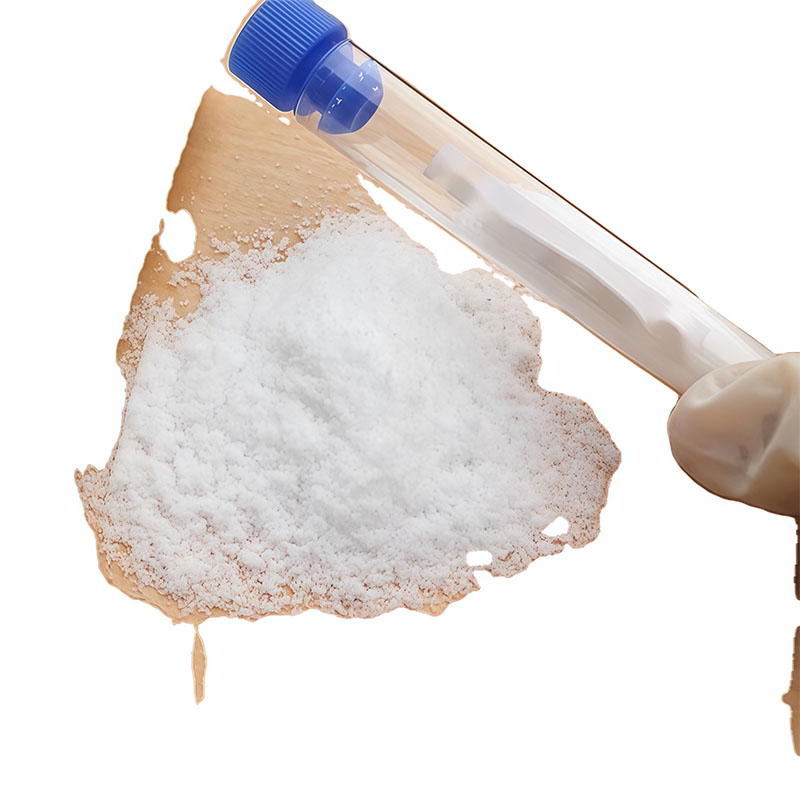
How does dendritic lubricant for polyolefins improve the processing flowability of the system through its three-dimensional dendritic structure?
Publish Time: 2026-04-27
Dendric lubricant for polyolefins is a class of functional additives with a highly branched structure. Its molecules exhibit a three-dimensional configuration resembling a "tree," radiating outwards and carrying various functional groups at their ends. This unique structure allows it to significantly improve melt flow behavior in polyolefin processing systems, thereby enhancing overall processing performance. Unlike traditional linear lubricants, its mechanism of action extends beyond interfacial lubrication to optimize the internal flow state of the system at the molecular scale.1. Three-dimensional branched structure reduces molecular entanglementThe core advantage of dendritic lubricants lies in their highly branched spatial structure. Compared to linear molecules, this three-dimensional configuration significantly reduces the probability of entanglement between molecular chains. In polyolefin melts, molecular chains themselves have a strong tendency to entangle, leading to increased melt viscosity and flow resistance. The dendritic structure, through a "spatial isolation effect," weakens inter-chain interactions, making the internal structure of the system looser, thereby reducing overall viscosity.2. Enhanced Dispersion and Compatibility through Multiple Terminal GroupsDendrite lubricants possess numerous terminal functional groups. These groups can weakly interact with polyolefin molecular chains, enabling uniform dispersion within the system. Good dispersibility prevents localized lubricant enrichment, thus ensuring uniform melt flow. Simultaneously, these terminal groups can also modulate interfacial energy to some extent, making the lubricant more effective during processing.3. Synergistic Improvement of Flow Behavior through Internal and External SlippageDendrite lubricants not only form an external slippage layer at the mold-melt interface but also provide internal slippage within the polymer. External slippage reduces frictional resistance between the melt and processing equipment, while internal slippage reduces internal friction between molecular chains. This dual lubrication mechanism makes melt flow more smoothly during extrusion or injection molding, significantly improving processing efficiency.4. Optimized Melt Spatial Arrangement through Three-Dimensional StructureDue to its three-dimensional structure, dendritic lubricants occupy space within the polyolefin system, thereby altering the arrangement of molecular chains. This "space occupancy effect" makes the melt structure more porous, facilitating the slippage of molecular chains under shear forces and thus reducing energy consumption during processing.5. Improved Shear Response and Rheological PropertiesDuring processing, polyolefin melts typically exhibit strong non-Newtonian fluid characteristics. The addition of dendritic lubricants can improve the shear response of the system, resulting in a lower apparent viscosity at high shear rates. This optimization of rheological properties enables more stable mold filling behavior even in complex mold structures.6. Enhanced Processing Stability and Product QualityBy reducing melt viscosity and improving flow uniformity, dendritic lubricants not only improve processing efficiency but also reduce melt fracture, flow marks, and surface defects, thereby improving the appearance quality and dimensional stability of the final product. This comprehensive improvement makes it of significant application value in high-end polyolefin processing.In summary, dendritic lubricant for polyolefins, through its three-dimensional branched structure, multi-terminal functional groups, and internal and external sliding synergistic mechanism, comprehensively optimizes system performance from the molecular scale to macroscopic flow behavior, thereby significantly improving processing fluidity and overall processing stability.