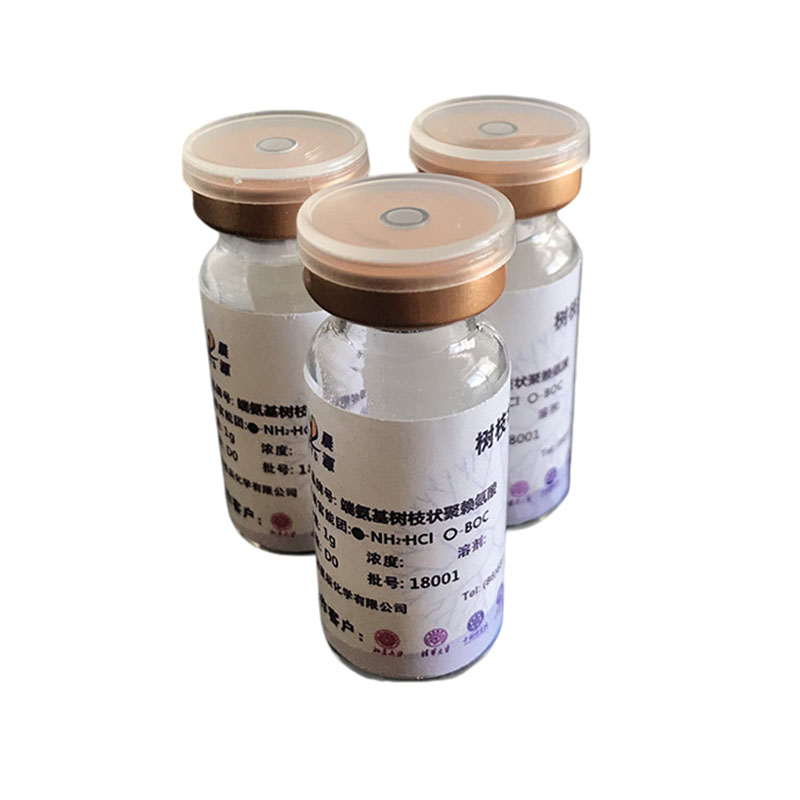
Dendritic Macromolecular Polylysine
Dendritic macromolecular polylysine
Dendritic polylysine is a highly branched, monodisperse synthetic polymer with a precise three-dimensional structure. It is constructed using lysine as the basic structural unit through layer-by-layer controlled polymerization (such as divergent or convergent polymerization), forming a dendritic architecture that radiates outwards from the core. This unique structure endows it with a precise molecular weight, abundant surface functional groups (such as amino groups), and internal cavities, making it an important functional material in the fields of biomedicine and materials science.
Key Characteristics and Advantages:
Precise Structure and Monodispersity: The synthesis process is controllable, allowing for the preparation of products at specific generations with extremely narrow molecular weight distributions. Performance can be precisely predicted and controlled.
High Biocompatibility and Degradability: The polylysine backbone exhibits excellent biocompatibility, and its peptide bonds can be enzymatically degraded in vivo, ultimately metabolizing into natural lysine, ensuring high safety.
High Surface Functional Group Density: The abundant outer amino groups can be easily chemically modified to connect targeting molecules (such as folic acid and peptides), fluorescent probes, drugs, or contrast agents, achieving multifunctionality.
Unique "Nano-Container" Effect: The internal hydrophobic cavities or electrostatic interactions can effectively encapsulate hydrophobic drugs, nucleic acids, or metal ions, improving loading capacity and stability.
Membrane Permeability: Due to its positively charged amino groups, it can interact with negatively charged cell membranes, promoting cellular uptake and making it a highly efficient gene and drug delivery carrier.
Main Applications:
Drug Delivery Systems: As nanocarriers, they encapsulate anticancer drugs and nucleic acid drugs (such as siRNA and plasmid DNA) for targeted delivery and controlled release, overcoming biological barriers.
Gene Transfection Reagents: As non-viral gene carriers, they are used in in vitro and in vivo gene therapy research, exhibiting high transfection efficiency and lower cytotoxicity than traditional cationic polymers (such as PEI).
Bioimaging and Diagnostics: They can be used to connect contrast agents (such as Gd³⁺ for MRI) or fluorescent dyes for tumor diagnosis and bioimaging.
Antibacterial Materials: The high-density positive charge on the surface can disrupt bacterial cell membranes, serving as novel antibacterial coatings or formulations.
Tissue Engineering: After modification, they can serve as functional components of scaffold materials, promoting cell adhesion, growth, and differentiation.Key Characteristics and Advantages:
Precise Structure and Monodispersity: The synthesis process is controllable, allowing for the preparation of products at specific generations with extremely narrow molecular weight distributions. Performance can be precisely predicted and controlled.
High Biocompatibility and Degradability: The polylysine backbone exhibits excellent biocompatibility, and its peptide bonds can be enzymatically degraded in vivo, ultimately metabolizing into natural lysine, ensuring high safety.
High Surface Functional Group Density: The abundant outer amino groups can be easily chemically modified to connect targeting molecules (such as folic acid and peptides), fluorescent probes, drugs, or contrast agents, achieving multifunctionality.
Unique "Nano-Container" Effect: The internal hydrophobic cavities or electrostatic interactions can effectively encapsulate hydrophobic drugs, nucleic acids, or metal ions, improving loading capacity and stability.
Membrane Permeability: Due to its positively charged amino groups, it can interact with negatively charged cell membranes, promoting cellular uptake and making it a highly efficient gene and drug delivery carrier.
Main Applications:
Drug Delivery Systems: As nanocarriers, they encapsulate anticancer drugs and nucleic acid drugs (such as siRNA and plasmid DNA) for targeted delivery and controlled release, overcoming biological barriers.
Gene Transfection Reagents: As non-viral gene carriers, they are used in in vitro and in vivo gene therapy research, exhibiting high transfection efficiency and lower cytotoxicity than traditional cationic polymers (such as PEI).
Bioimaging and Diagnostics: They can be used to connect contrast agents (such as Gd³⁺ for MRI) or fluorescent dyes for tumor diagnosis and bioimaging.
Antibacterial Materials: The high-density positive charge on the surface can disrupt bacterial cell membranes, serving as novel antibacterial coatings or formulations.
Tissue Engineering: After modification, they can serve as functional components of scaffold materials, promoting cell adhesion, growth, and differentiation.