How to improve the coverage integrity of corner areas in flame-retardant thermal insulation protective materials for complex, irregularly shaped surfaces?
Publish Time: 2026-05-18
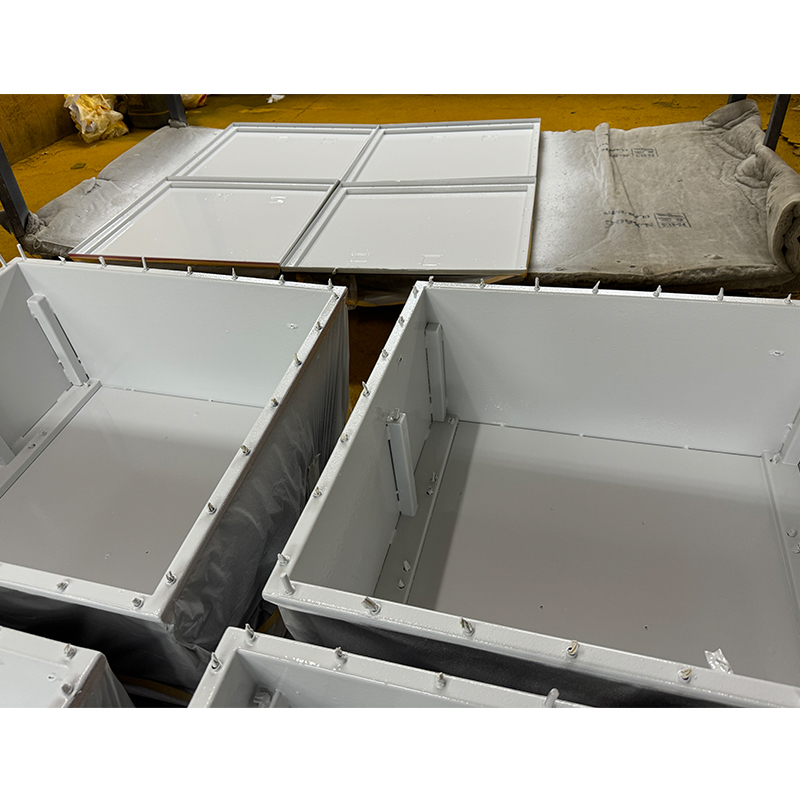
In industrial protection, building safety, and high-temperature equipment protection, flame-retardant thermal insulation protective materials are widely used in pipes, equipment shells, and complex structural surfaces. Especially on equipment surfaces with numerous bends, corners, irregular curves, and irregular connections, traditional protective materials are prone to problems such as poor adhesion, insufficient corner coverage, or localized gaps during construction. Incomplete corner coverage can create heat concentration points under high temperatures, affecting overall protective performance and even posing safety hazards.1. Enhancing Material Flexibility to Improve Surface AdhesionComplex, irregularly shaped structures often contain numerous curved, recessed, and sharp-angled areas. If the protective material lacks flexibility, problems such as edge lifting, bulging, or gaps can easily occur during installation. Therefore, improving the material's flexibility is crucial for improving corner coverage. Currently, many high-performance flame-retardant thermal insulation materials employ fiber composite structures, allowing the material to maintain high-temperature resistance while possessing better bending capabilities. When materials can freely deform to conform to complex curved surfaces, they can adhere more tightly to the equipment surface, reducing edge voids. Simultaneously, some materials incorporate an elastic buffer layer that automatically rebounds and fills small gaps after pressure, further improving overall coverage integrity.2. Optimizing Splicing Processes to Reduce Corner GapsDuring the construction of large equipment or complex structures, protective materials often require splicing across multiple areas. If the splicing method is improper, gaps can easily form at the corner joints, affecting the overall insulation effect. Therefore, optimizing the splicing process is crucial. For example, when constructing in irregularly shaped areas, a segmented wrapping method can be used, pre-cutting materials according to different structural dimensions to more accurately match the corner contours. Simultaneously, for corner areas, an overlapping structural design can be used, increasing the overlapping area to improve the sealing effect and prevent cracking at the joints due to thermal expansion and contraction. Furthermore, in some high-requirement scenarios, high-temperature resistant sealant is used for edge filling, further enhancing the continuity and stability of the protective layer.3. Strengthen the Fixing Structure to Enhance Long-Term StabilityEven if the material initially provides complete coverage, if the fixing structure is unstable, corner areas may still experience detachment or loosening under long-term high temperature, vibration, or wind pressure conditions. Therefore, strengthening the fixing method is also a key measure to improve the integrity of the coverage. Currently, many flame-retardant and heat-insulating systems use a combination of mechanical and adhesive fixing methods. For example, on the surface of large, irregularly shaped equipment, high-temperature resistant clips, pressure plates, or metal straps can be used for auxiliary fixing to effectively prevent material displacement. At the same time, adding local reinforcement structures to corner areas can also reduce edge warping problems caused by uneven stress during long-term use. For industrial equipment subject to frequent vibration, flexible connection structures can also be used to keep the material in a stable and fitted state during equipment operation, thereby improving the overall reliability of protection.