How does PLA-SLIK consumable achieve a milky-smooth surface texture through material structure design?
Publish Time: 2026-04-22
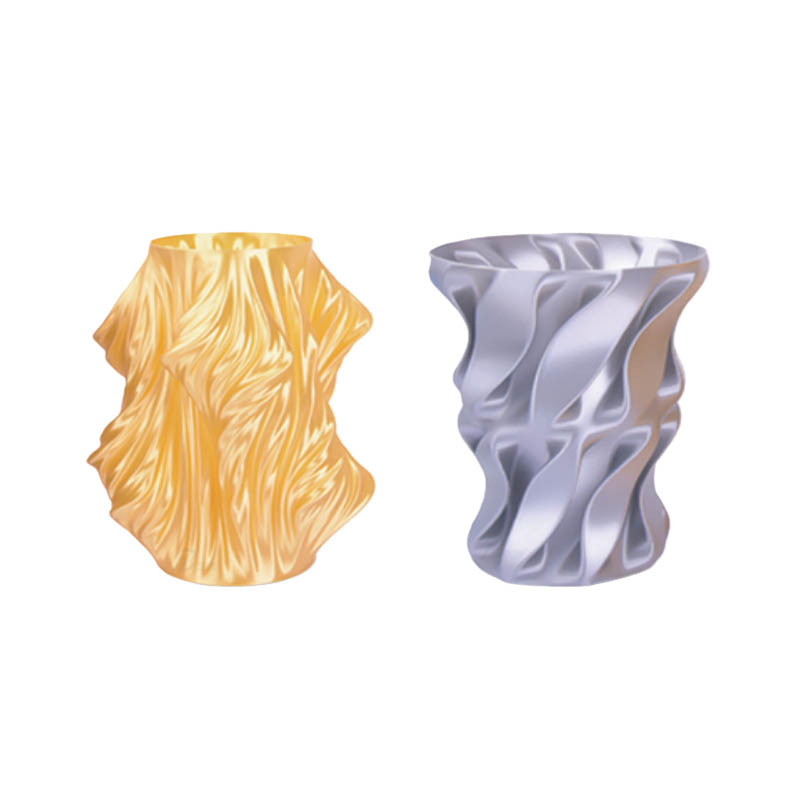
In 3D printing material systems, PLA-SLIK consumable, a modified PLA filament with a silk-like texture, has garnered widespread attention for its delicate surface and soft luster. Its printed products exhibit a uniform, smooth texture similar to milk, with a touch of pearly sheen. This unique appearance is not simply dependent on printing parameters, but rather stems from the synergistic design of the material's internal structure and formulation system, achieving macroscopic visual optimization through microstructural control.1. Optimized Matrix Resin Enhances Basic Film UniformityPLA-SLIK uses polylactic acid as its base resin, maintaining good printability and crystallization control in its molecular structure. By optimizing the molecular weight distribution, the fluidity in the molten state is made more stable, helping the material form a continuous and uniform melt flow during extrusion. This reduces surface graininess caused by uneven flow, laying the foundation for a delicate texture.2. Functional Additives Improve Optical and Tactile PerformanceAdding specific proportions of functional additives, such as pearlescent powder or micro-light-diffusing materials, to the PLA substrate alters the way the material reflects light. These microparticles are uniformly dispersed in the matrix during molding, causing soft, diffuse reflection of surface light, thus reducing the visibility of layer textures and enhancing a smooth, milky visual effect.3. Optimized Melt Rheology for Layer BlendingPLA-SLIK incorporates controlled melt rheology during processing, resulting in better spreading ability during extrusion. The material can more fully fuse boundary areas during layer stacking, reducing abrupt interlayer interface changes and creating a more continuous and smooth printed surface. This excellent layer blending is a crucial factor in achieving a delicate texture.4. Crystallization Control Reduces Surface RoughnessPLA materials are prone to forming localized crystalline structures during cooling, which can lead to microscopic inhomogeneities on the surface. By introducing crystallization regulators into the formulation, the material forms a more uniform and fine crystalline structure during cooling, thereby reducing surface undulations and resulting in a softer, more refined overall texture.5. Improved Extrusion Stability for Consistent MoldingIn the 3D printing process, a stable extrusion state significantly impacts surface quality. PLA-SLIK, by improving melt flow index and thermal stability, ensures a consistent output at different printing speeds, avoiding surface streaks or graininess caused by fluctuations, thus further enhancing the refined appearance.In summary, PLA-SLIK consumable achieves a milky-smooth surface texture through multi-faceted material structure design, including matrix resin optimization, introduction of functional fillers, rheological property control, and crystallization behavior control. This material design approach, starting from the microstructure, not only enhances visual appeal but also further expands the application space of PLA materials in high-end 3D printing.