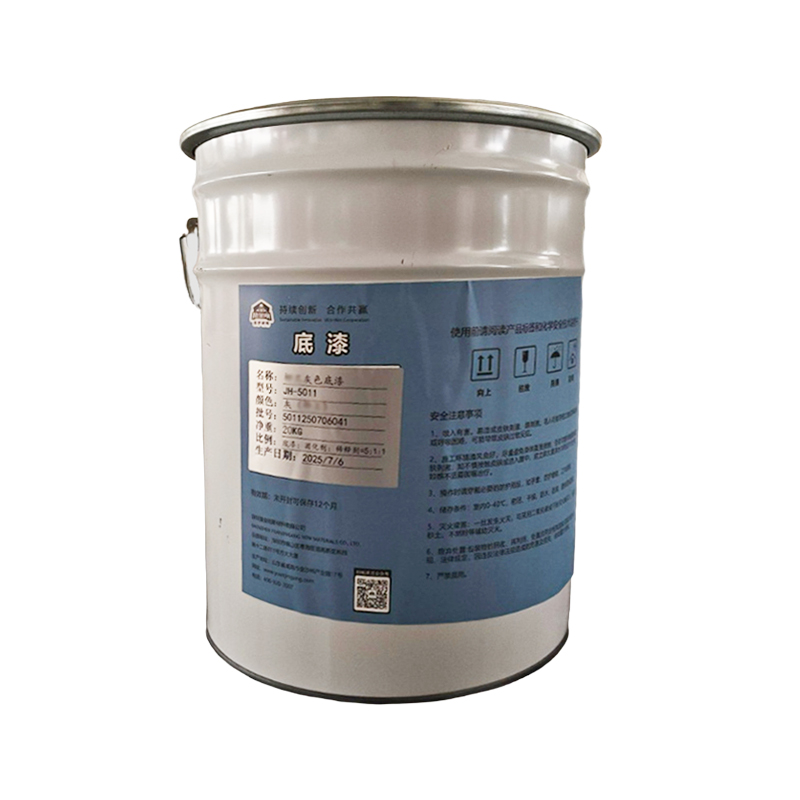
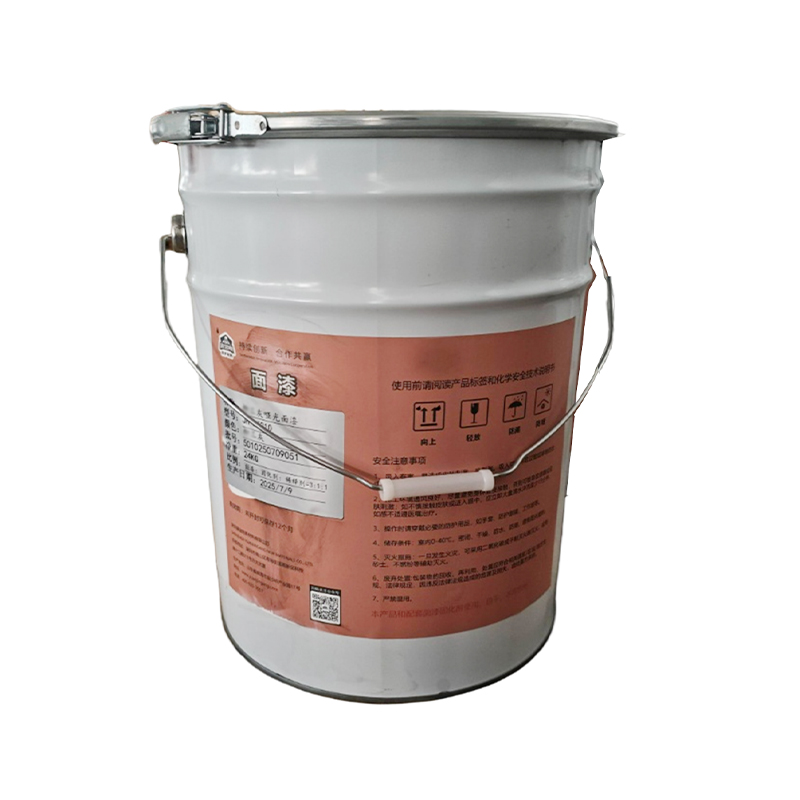
How can aspartic polyurea coating balance application flowability and film quality under high solids content conditions?
Publish Time: 2026-04-23
In the fields of engineering machinery and heavy-duty corrosion protection, coating systems often need to simultaneously meet the dual requirements of high-performance protection and application efficiency. Aspartic polyurea coating, due to its high solids content, low VOC emissions, and rapid curing, is widely used in metal structures and harsh environmental protection. However, under high solids content conditions, the viscosity of the coating system increases, which can easily affect application flowability and the final film quality.1. Balancing Flow Performance with High Solids Content Formulation DesignIn high solids content coating systems, the higher ratio of resin to curing components can easily lead to increased system viscosity. By optimizing the molecular structure of the aspartic ester resin to achieve a lower initial viscosity while maintaining solids content, the coating's flowability can be effectively improved. Furthermore, by rationally selecting reactive diluents, the leveling ability during application can be further enhanced without significantly increasing VOCs.2. Improved Application Window Through Reaction Rate ControlAspartic polyurea coatings have a fast curing speed, which is one of their advantages. However, an excessively fast reaction can lead to insufficient leveling time. By adjusting the activity and catalytic system of the isocyanate component, the appropriate working time can be extended during the application stage, allowing the coating sufficient time to flow and spread on the substrate surface, resulting in a more uniform film structure.3. Enhanced Surface Quality Through Optimized Application ProcessesIn practical applications, when using high-pressure airless spraying or traditional spraying equipment, the uniformity of the coating can be significantly improved by properly controlling the spraying pressure, spraying distance, and atomization effect. Good atomization helps the coating achieve uniform distribution at the moment of spraying, thereby reducing surface defects such as orange peel and sagging, and improving film quality.4. Surface Tension Regulation Promotes Natural LevelingBy introducing an appropriate amount of leveling aid into the formulation, the surface tension of the coating system can be reduced, making it easier to spread on the substrate surface and automatically eliminating minor unevenness. This self-leveling property helps to obtain a smooth and dense film even under high solids content conditions, improving appearance quality and protective performance.5. Rapid Curing to Form a Dense Protective LayerAfter application, the Aspartic polyurea coating rapidly undergoes a cross-linking reaction, forming a high-strength three-dimensional network structure. This rapid curing characteristic not only shortens the application cycle but also effectively locks in the coating's state, reducing potential defects during flow and ensuring the final film's density and durability.In summary, through formulation optimization, reaction rate control, application process adjustments, and the comprehensive application of leveling agents, the Aspartic polyurea coating can achieve excellent application leveling and superior film quality even under high solids content conditions. This coating system, which balances environmental performance with high protective capabilities, provides an efficient and reliable solution for engineering machinery and heavy-duty corrosion protection applications.