How does radiative cooling coating reduce internal temperature rise and improve system safety in energy storage battery cabinet applications?
Publish Time: 2026-04-13
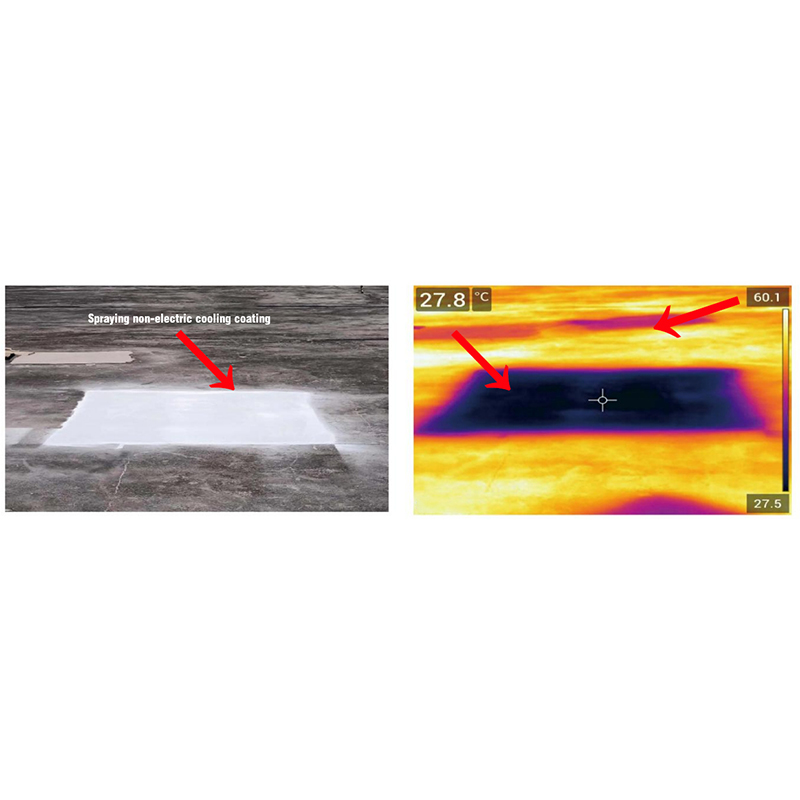
During the operation of an energy storage battery cabinet, batteries continuously generate heat during charging and discharging. If heat dissipation is not timely, the increased internal temperature will accelerate battery aging and even induce the risk of thermal runaway. Therefore, achieving effective cooling without additional energy consumption is crucial for improving the safety of energy storage systems. Radial cooling coating, as a novel energy-saving technology without electricity, plays a significant role in reducing internal temperature rise through its unique thermal management mechanism.1. Passive Cooling Achieved Through Synergistic Radiation and ReflectionThe core principle of radiative cooling coating lies in the synergistic effect of "high reflectivity + high radiation." On one hand, the coating can efficiently reflect visible light and near-infrared radiation from sunlight, reducing the absorption of external heat by the equipment. On the other hand, it has a high emissivity in the mid- and far-infrared bands, releasing the heat generated inside the equipment outwards to the sky in the form of infrared radiation, thus achieving continuous cooling. This dual mechanism allows the energy storage battery cabinet to maintain a low surface temperature even under strong sunlight during the day.2. Reduce Casing Temperature and Suppress Heat TransferThe casing of an energy storage battery cabinet is a crucial interface for heat transfer. As the external surface temperature decreases, the driving force for heat transfer from the outside to the inside also decreases. Radial cooling coatings significantly reduce the casing temperature, effectively reducing heat transfer into the cabinet interior and thus slowing down the rate of internal temperature rise. This is particularly critical for high-density battery systems, as even a temperature difference of a few degrees Celsius can significantly impact battery life and safety.3. Improve Internal Thermal Environment and Temperature UniformityIn addition to reducing overall temperature, radiative cooling coatings also improve the internal heat distribution of the battery cabinet. By reducing external heat load, the internal cooling system can operate more efficiently, thereby reducing the formation of localized hotspots. A more uniform temperature distribution helps prevent individual battery modules from prematurely aging or malfunctioning due to overheating, improving the overall stability of the system.4. Enhance Safety and Reduce the Risk of Thermal RunawayBattery thermal runaway is usually triggered by localized overheating and can spread rapidly. Radial cooling coatings reduce the initial temperature level, delaying heat accumulation and providing the system with more safety buffer time. In extreme cases, this temperature suppression effect can reduce the probability of thermal runaway and slow down the progression of an accident, buying time for monitoring and protection systems to intervene, thereby improving the overall safety level.5. Self-cleaning and Long-Term StabilityIn outdoor environments, dust and contaminants reduce the reflectivity of the coating, thus affecting cooling performance. Radial cooling coatings typically possess self-cleaning properties, reducing contaminant adhesion and keeping the surface clean, thereby maintaining its high reflectivity and emissivity. This long-term stability ensures that the energy storage battery cabinet continues to achieve good cooling performance throughout its entire lifespan.6. Energy Saving and System Synergy AdvantagesCompared to traditional active cooling methods, radiative cooling coatings require no additional energy consumption, significantly reducing the burden on air conditioning or air-cooled systems. In large-scale energy storage power stations, this not only reduces energy costs but also reduces system complexity. By working in conjunction with existing thermal management systems, more efficient and reliable temperature control can be achieved.In summary, radiative cooling coatings effectively reduce the temperature rise of energy storage battery cabinets and improve the internal thermal environment through a dual mechanism of reflecting solar radiation and enhancing thermal radiation dissipation. Its passive, energy-saving, and stable characteristics make it one of the key technologies for improving the safety and reliability of energy storage systems.