How can PLA-SLIK consumable maintain good interlayer adhesion and structural strength while achieving a silky smooth surface?
Publish Time: 2026-04-14
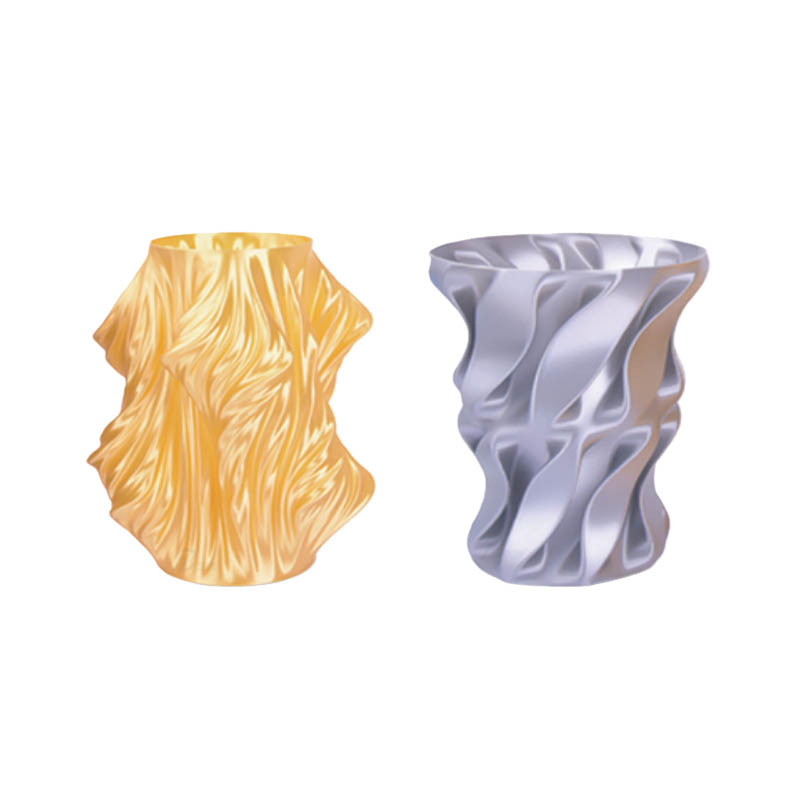
PLA-SLIK consumable, a modified PLA filament, has garnered significant attention in the 3D printing field for its silky smoothness and delicate surface. However, maintaining good interlayer adhesion and structural strength while enhancing aesthetics is crucial for its material design and process optimization. Achieving this goal relies on the synergy of material formulation, processing technology, and printing parameters.1. Balancing Material Modification and Basic PerformanceThe core of PLA-SLIK consumable lies in the modification of traditional PLA substrates. During production, specific color masterbatches and functional additives are added to create a more uniform flow structure in the molten state, thereby improving surface gloss. These additives not only improve optical properties but also enhance the material's toughness to some extent, giving printed parts better impact resistance while maintaining aesthetic appeal. The key is to control the addition ratio to avoid weakening the molecular bonding of PLA itself due to excessive modification.2. Melt Flow and Interlayer Fusion MechanismThe essence of interlayer adhesion stems from the fusion of adjacent printed layers. PLA-SLIK consumable optimizes the melt flow index, resulting in better flowability and wettability during extrusion. When a new layer is deposited on the surface of the previous layer, it fully fills microscopic voids and facilitates the interdiffusion of molecular chains, forming a strong bonding interface. This excellent melting characteristic is crucial for maintaining structural strength while ensuring a smooth surface.3. Optimized Control of Printing ParametersBesides the material itself, printing process parameters significantly impact performance. Appropriately increasing the nozzle temperature enhances interlayer fusion, ensuring sufficient heat during material deposition to promote molecular chain bonding. Simultaneously, controlling the printing speed and cooling fan intensity prevents excessively rapid material cooling, which could lead to insufficient interlayer adhesion. By optimizing these parameters, a silky smooth surface can be achieved while ensuring the density and strength of the internal structure.4. Synergistic Formation of Microstructure and Surface GlossThe silky sheen of PLA-SLIK consumable originates from the uniform reflection of light by its surface microstructure. Additives enable the material to form a finer crystalline structure during cooling, thereby reducing surface roughness. This structure not only enhances the visual appeal but also helps increase the interlayer contact area, resulting in a tighter bond. In other words, the improved gloss is not merely a change in appearance but rather a result of optimized internal material structure.5. Interlayer Stress Control and Crack ResistanceDuring the printing process, temperature changes generate internal stress, which, if not properly controlled, can lead to interlayer cracking. PLA-SLIK consumable improves material toughness, giving it better stress release capabilities during cooling and contraction, thus reducing crack formation. Furthermore, uniform heat distribution and a stable printing environment also help reduce stress concentration, further enhancing overall structural strength.6. Path to Achieving Comprehensive PerformanceOverall, PLA-SLIK consumable's ability to achieve a silky-smooth surface while maintaining good interlayer adhesion and structural strength is the result of combined material design and process control. From formulation optimization to printing parameter adjustment and microstructure control, every step impacts the final performance. Through a systematic optimization strategy, PLA-SLIK consumable not only meets aesthetic requirements but also fulfills functional needs.In summary, the advantage of PLA-SLIK consumable lies in achieving a balance between aesthetics and performance. Through modified materials and optimized processes, it enables printed parts to possess both an elegant, silky texture and reliable structural strength, providing a higher-quality option for 3D printing applications in display, art, and functional components.