How can dendritic macromolecular polylysine achieve highly controllable molecular weight distribution through precise three-dimensional structures?
Publish Time: 2026-04-07
In the fields of modern biomaterials and nanoscience, dendritic macromolecular polylysine has attracted widespread attention due to its highly controllable three-dimensional structure and rich functionalization potential. Compared with linear polymers, dendritic polylysine achieves precise control and highly uniform molecular weight distribution through a layered structure design radiating outward from the core. This characteristic not only enhances the predictability of materials but also provides a powerful molecular platform for drug delivery, gene vectors, tissue engineering, and the development of nanocomposites.1. Controlled Polymerization Strategy for Precise Molecular WeightThe synthesis of dendritic polylysine relies on layer-by-layer controlled polymerization strategies, including divergent polymerization and convergent polymerization. In divergent polymerization, synthesis begins with a core starting unit, generating a highly branched dendritic structure by extending branches layer by layer. With each additional layer, the molecular weight increases by a predictable multiple. This method allows for strict control of the number of molecular units in each layer, thereby achieving precise molecular weight regulation. Convergent polymerization, on the other hand, connects from the branch ends to the core. By pre-synthesizing branch fragments before connecting them to the core, it improves the uniformity and controllability of the molecular structure and effectively reduces defect formation. Combining these two strategies allows for achieving ideal molecular weight ranges and distributions according to application requirements.
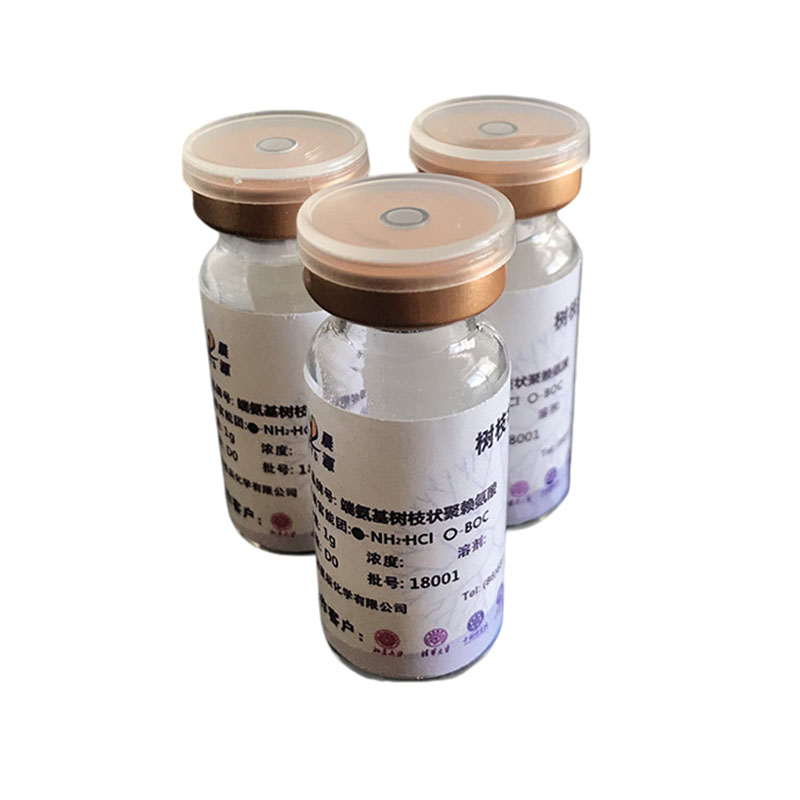

2. The Uniformity Advantage of Three-Dimensional Dendritic StructuresThe core-branch-terminal three-dimensional hierarchical structure of dendritic polylysine ensures that each molecular unit is spatially highly symmetrical. This spatial uniformity ensures highly controllable molecular weight distribution, avoiding the molecular weight dispersion problem common in linear polymers. Simultaneously, the uniform three-dimensional structure also allows the molecules to exhibit consistent volume and solubility behavior in solution, thereby improving reproducibility in biological and material systems. By controlling the branch length and branch density, the overall molecular weight can be finely adjusted while maintaining a narrow molecular weight distribution to meet the needs of high-precision applications.3. The Relationship Between Functionalization Potential and Molecular Weight ControlHighly controllable molecular weight not only improves the physical stability of the material but also facilitates subsequent functionalization. The number of terminal amino functional groups on the surface of dendritic polylysine is directly proportional to its molecular weight. By adjusting the number of molecular layers and branch length, the number of surface functional groups can be precisely controlled. This is crucial for the loading capacity of drug or gene carriers. Precise control of molecular weight and branching structure ensures predictable carrier behavior in vivo, including cellular uptake efficiency, blood circulation time, and release kinetics, thereby significantly improving the material's biocompatibility.4. Solution Behavior and StabilityDue to its highly controllable molecular weight, dendritic polylysine forms stable spherical or hemispherical conformations in aqueous solutions. The highly exposed amino functional groups at the molecular chain ends help regulate intermolecular interactions and solution viscosity. This controllable molecular weight and three-dimensional structure also ensures predictable molecular stability and self-assembly behavior in in vitro environments, making it easier to form uniform nanoparticles or carrier systems in drug delivery and nanocomposites.In summary, dendritic macromolecular polylysine achieves highly controllable and uniform molecular weight distribution through precise three-dimensional structural design and the use of divergent or convergent polymerization strategies. This controllability not only enhances the structural stability and functionalization potential of materials, but also provides a reliable molecular platform for biomedicine, materials science, and nanotechnology, demonstrating highly promising application value.