Achieving a flawless, high-gloss finish in advanced plastic and coating formulations is a persistent challenge for manufacturers, particularly when dealing with systems containing fillers or fiberglass. Traditional linear additives often fall short, requiring high loadings that can compromise the mechanical properties of the final product. The dendritic anti-floating fiber dispersant has emerged as a superior, highly efficient solution to this problem. Its exceptional performance at minimal dosage levels is fundamentally rooted in its unique three-dimensional molecular architecture and specialized functional design.
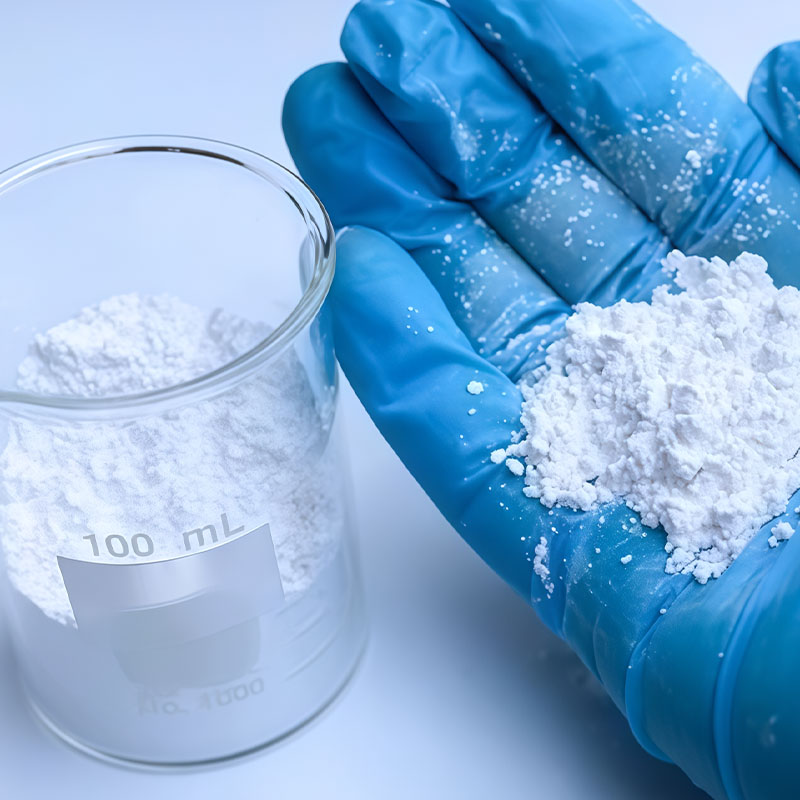
The primary reason for the superior efficiency of the dendritic dispersant lies in its hyper-branched, globular molecular structure. Unlike conventional linear polymers that tend to entangle and increase system viscosity, dendritic molecules possess a compact, spherical shape with numerous terminal functional groups on their periphery. This unique architecture provides an exceptionally high density of active sites. When introduced into a polymer matrix, these multiple functional groups act as powerful anchoring points, simultaneously interacting with multiple pigment particles or glass fibers. This multi-point attachment creates a robust steric barrier that effectively prevents the agglomeration of particles and the floating of fibers to the surface, ensuring a perfectly uniform dispersion.Furthermore, the internal structure of the dendritic molecule contains numerous nanoscale cavities. These voids can physically encapsulate pigment particles or small fiber fragments, locking them in place and preventing them from migrating during the curing or cooling process. This encapsulation mechanism is highly effective at eliminating the "floating fiber" phenomenon, which is notorious for creating microscopic surface irregularities that scatter light and destroy gloss. Because the dendritic molecule achieves this superior stabilization through its precise geometric shape rather than relying on sheer mass, it requires only a fraction of the dosage of traditional dispersants to achieve the same, or even better, leveling and smoothing effect.The minimal dosage requirement also translates directly into significant processing advantages. High concentrations of traditional additives can act as plasticizers, weakening the structural integrity of the plastic or coating. In contrast, the dendritic dispersant enhances the interfacial bonding between the filler and the polymer matrix without diluting the base resin. This superior interfacial adhesion not only maintains but can actually improve the mechanical strength of the composite. Additionally, the compact, non-entangling nature of dendritic molecules acts as an internal lubricant. This dramatically improves the melt flow index and processing fluidity of the system, allowing the material to fill molds more completely and smoothly, which is a critical factor in achieving a mirror-like, high-gloss surface.Finally, the efficiency of the dendritic anti-floating fiber dispersant is evident in its economic and environmental benefits. Because it operates effectively at extremely low addition rates, manufacturers can significantly reduce their raw material costs per unit. Lower additive loadings also mean less unreacted material remaining in the final product, contributing to better long-term stability and weatherability. Ultimately, the dendritic dispersant represents a paradigm shift in additive technology. By leveraging precise molecular engineering to maximize surface activity and steric stabilization, it delivers unparalleled high-gloss finishes and flawless aesthetics while using minimal resources, making it the most efficient solution for demanding industrial applications.