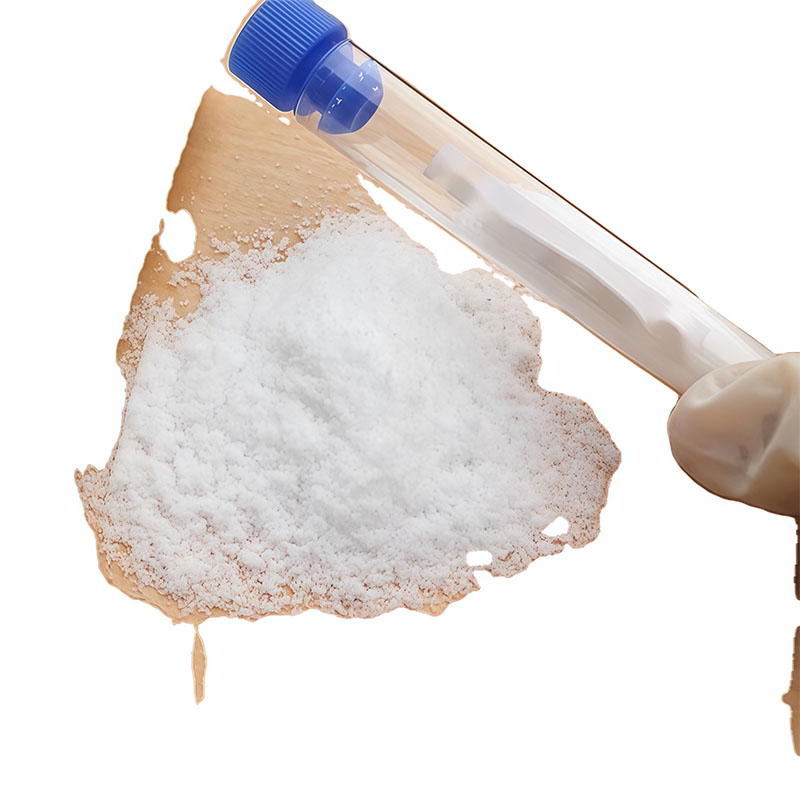
How does dendritic lubricant for polyolefins improve the processing fluidity of PP, PA, and other plastic systems through special functional groups?
Publish Time: 2026-03-30
In modern plastics processing, engineering plastics such as polyolefins (PP) and nylon (PA) are widely used in automotive parts, electronic components, appliance housings, and industrial products due to their excellent mechanical properties and chemical stability. However, polymer melts often face problems such as insufficient fluidity, uneven mold filling, and unsatisfactory surface gloss during processing. Dendritic lubricant for polyolefins was developed to address these issues. Its special molecular structure and functional group design can effectively improve the processing fluidity of plastic systems, optimizing the appearance and performance of products.1. The Unique Role of Dendritic Molecular StructureThe core of dendritic lubricant for polyolefins lies in its dendritic molecular structure. Compared to linear molecules, dendritic molecules have more terminal functional groups and a larger molecular volume. This unique structure can form a "molecular lubricating layer" in molten plastics, reducing inter-chain friction and melt viscosity, thereby significantly improving the processing fluidity of PP, PA, and other plastics. Especially in high-filler or glass fiber reinforced systems, the dendritic structure can coat filler particles or fibers, preventing their aggregation in the melt, reducing shear stress fluctuations, and improving flow uniformity.2. Optimization Mechanism of Special Functional GroupsThe special functional groups on dendritic lubricants play a key role in improving processing flowability. Different functional groups can undergo physical adsorption or weak chemical interaction with polyolefin or nylon molecular chains, reducing the friction between molecular chains and making the melt flow more easily. For glass fiber or filler-reinforced plastics, these functional groups can improve interfacial compatibility, allowing the filler to be uniformly dispersed in the matrix, reducing fiber floating, and improving the mechanical properties of the product. Through this molecular-level lubrication, dendritic lubricants not only optimize melt flow but also improve mold filling and thin-walled part molding quality.3. Improved Processing Performance and Product AppearanceIn injection molding, extrusion, and blow molding processes, dendritic lubricants for polyolefins can reduce the load on equipment from processing temperatures, reduce melt shear stress, and improve production efficiency. Meanwhile, its improved flowability allows for uniform filling of thin-walled, complex molds or high-filler parts, reducing warpage and bubble defects. In terms of appearance, dendritic lubricants effectively enhance the surface gloss and smoothness of products, resulting in final products with not only excellent mechanical properties but also good visual appeal.4. Multi-System Adaptability and Comprehensive OptimizationDendric lubricant for polyolefins can be applied to various plastic systems such as PP, PA, PC, PBT, and PMMA. It possesses both internal and external lubrication properties, optimizing internal melt flow and improving the demolding performance between the product and the mold, achieving a dual improvement in processability and appearance. In high-filler or fiber-reinforced systems, the lubricant can also reduce melt shear fluctuations, improve dimensional stability and molding accuracy, providing reliable protection for automotive parts, electronic housings, and high-performance industrial products.Dendric lubricant for polyolefins, through its dendritic molecular structure and special functional groups, achieves significant improvement in the processing flowability of plastic systems such as PP and PA. It not only reduces melt friction and optimizes filler and fiber dispersion, but also improves the surface gloss and mechanical properties of the finished product. In various plastic systems, the application of dendritic lubricants effectively solves problems such as insufficient flowability, uneven mold filling, and surface defects, providing a reliable guarantee for the stable production and high-quality molding of high-performance plastic products.