How does radiative cooling coating achieve passive daytime cooling through atmospheric windows without consuming electricity?
Publish Time: 2026-02-04
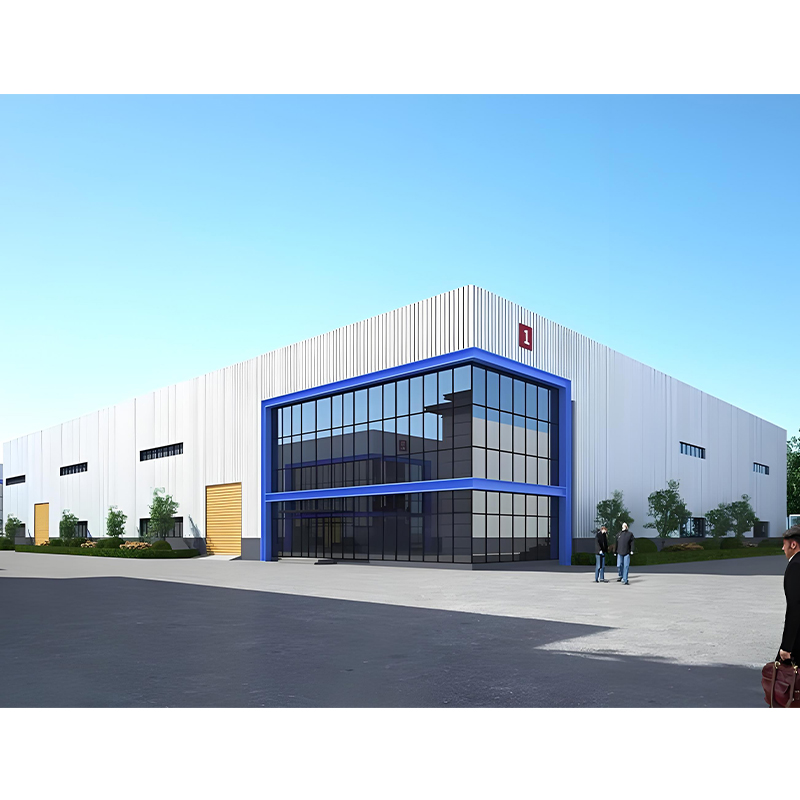
Against the backdrop of surging global energy demand and the parallel pursuit of "dual carbon" goals, passive, zero-energy thermal management technology is becoming an important direction for green technology. As a novel energy-saving material, radiative cooling coating requires no electricity and relies solely on its own optical properties and the physical windows of the Earth's atmosphere to achieve an "abnormal" cooling effect where the surface temperature is significantly lower than the ambient temperature during the hot daytime. Its core principle lies in cleverly utilizing the dual mechanisms of solar spectrum reflection and mid-infrared radiation heat dissipation, directly expelling heat to the cold outer space through an "atmospheric transparent window."1. High Solar Reflectivity: Keeping Heat Out of the SpheresDuring the day, the main source of heat generation for objects is solar radiation, with its energy concentrated in the 0.3–2.5 μm ultraviolet-visible-near-infrared band. Radial cooling coating first constructs a multi-scale scattering structure by adding high-refractive-index inorganic particles, achieving a reflectivity of over 95% for the solar spectrum. This means that the vast majority of incident sunlight is directly "repelled," hardly absorbed by the coating, thus suppressing surface temperature rise at its source. This characteristic distinguishes it from traditional dark-colored or ordinary white coatings—the latter, while possessing some reflectivity, often exhibit strong absorption in the near-infrared band, still leading to significant temperature increases.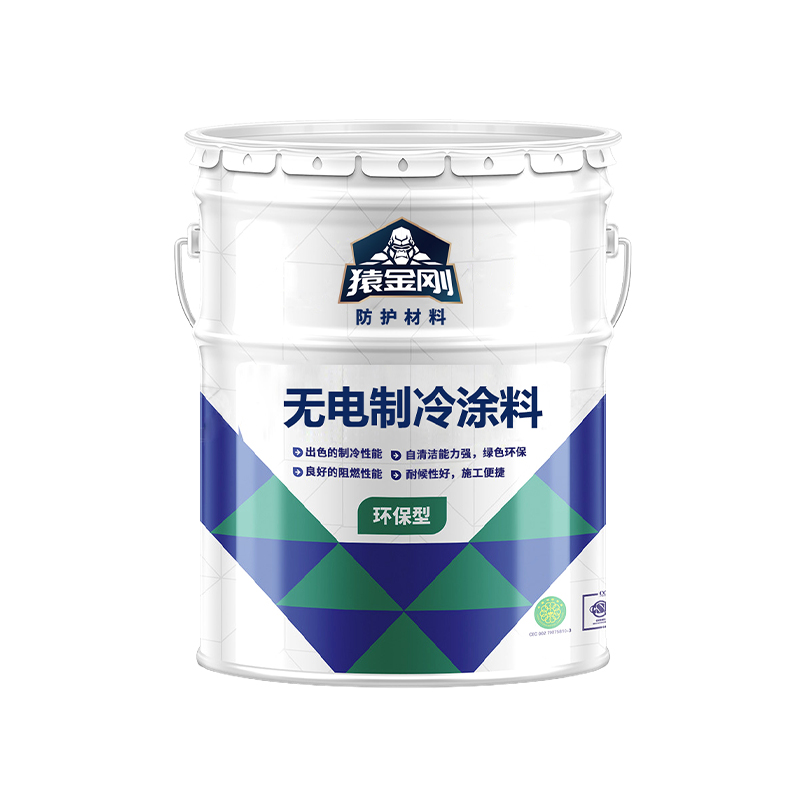
2. High Infrared Emissivity: Heat Dissipation from the SkySimply reflecting sunlight is insufficient to achieve cooling "below ambient temperature." Another key characteristic of the radiative cooling coating is its extremely high thermal emissivity in the 8–13 μm wavelength range. This band corresponds precisely to the "infrared transparency window" of the Earth's atmosphere—meaning that greenhouse gases such as water vapor and carbon dioxide absorb infrared radiation in this band very weakly, allowing thermal radiation emitted by surface objects to penetrate the atmosphere and dissipate directly into deep space at approximately 3K. The coating efficiently emits heat energy within this window through its own molecular vibrations or the phonon polariton resonance of specific fillers, forming a continuous passive heat dissipation channel. Even under strong midday sunlight, as long as the radiative heat dissipation power exceeds the residual heat absorption power, the surface temperature can remain stably 5–10°C or even more below the ambient temperature.3. No Electricity, Self-Cleaning, and Widely Adaptable: Empowering Green InfrastructureThanks to the aforementioned physical mechanisms, radiative cooling coating requires absolutely no external energy input, truly achieving "zero operating costs." Simultaneously, its surface is often designed with a superhydrophobic or photocatalytic structure, endowing it with excellent self-cleaning properties—rainwater washes away dust, and sunlight decomposes organic pollutants, preventing the accumulation of contaminants that lead to a decline in reflectivity/radiation performance. This makes it particularly suitable for facilities that are difficult to maintain and sensitive to temperature control, such as photovoltaic energy storage power stations, outdoor battery cabinets, liquefied natural gas storage tanks, and bulk chemical storage tanks. For example, in photovoltaic systems, reducing the temperature of the module backsheet can improve power generation efficiency and extend lifespan; in energy storage battery cabinets, passive cooling can reduce reliance on air conditioning, improving system safety and energy efficiency.