How does radiative cooling coating achieve electricity-free cooling through high reflectivity and high emissivity?
Publish Time: 2026-07-09
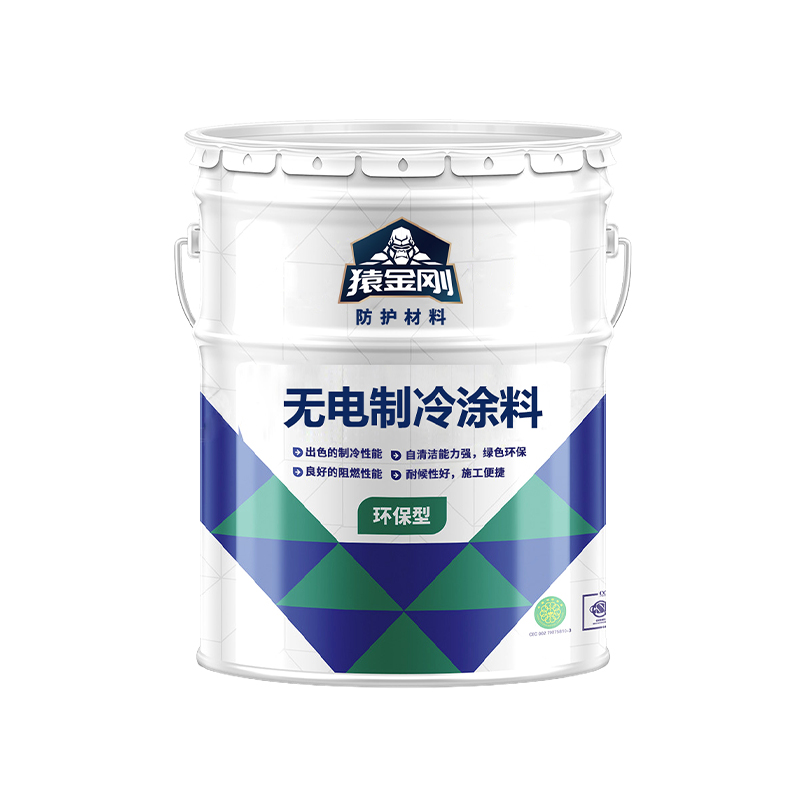
With the rapid development of the new energy industry and energy-saving and environmental protection technologies, equipment heat dissipation and temperature control have become crucial factors affecting system safety and operational efficiency. Traditional cooling methods typically rely on air conditioning, air cooling, or liquid cooling equipment, which not only consumes continuous electricity but also increases equipment maintenance costs. Radial cooling coating, as a new type of electricity-free energy-saving cooling material, utilizes its special optical properties of high reflectivity and high emissivity to enable objects to actively reduce solar radiation absorption and release their own heat into the external environment in the form of infrared radiation, achieving a passive cooling effect without additional energy input. It is widely used in photovoltaic energy storage power stations, energy storage containers, bulk storage tanks, and outdoor battery cabinets, providing efficient temperature control solutions for new energy equipment.1. High Reflectivity Reduces Solar Radiation AbsorptionOne of the key aspects of radiative cooling coating's cooling effect is its excellent solar reflectivity. Through a special material formulation design, the coating's surface has a high reflectivity to sunlight, effectively reflecting a large amount of visible and near-infrared light, reducing the absorption of solar radiation energy by the equipment surface. When photovoltaic energy storage devices, outdoor battery cabinets, or energy storage containers are exposed to sunlight for extended periods, ordinary metal surfaces tend to heat up rapidly due to solar energy absorption. However, using a radiative cooling coating significantly reduces surface heat accumulation and minimizes temperature rise. By reducing solar radiation input, the coating reduces heat load at its source, creating a more stable operating environment for the equipment.2. High Emissivity Promotes Active Heat ReleaseIn addition to reducing external heat absorption, radiative cooling coatings can actively release heat generated inside the equipment to the external environment through their high emissivity. Objects continuously emit infrared radiation, and a high emissivity coating enhances this process, allowing surface heat to be transferred away more quickly in the form of infrared radiation. This heat exchange effect is more pronounced at night or in lower-temperature environments, helping energy storage containers, battery cabinets, and other equipment to continuously dissipate heat and reduce internal temperature rise. Compared to traditional insulation materials that primarily block heat transfer, radiative cooling coatings focus more on active heat dissipation, achieving long-term stable cooling by regulating the heat release process.3. Energy-Saving Characteristics Enhance Equipment ReliabilityRadiative cooling coatings require no electricity and achieve continuous cooling without relying on mechanical equipment, effectively reducing energy consumption and maintenance costs. In applications such as photovoltaic energy storage power stations and outdoor energy storage equipment, the coating can reduce the impact of high-temperature environments on battery performance, lower the risk of thermal degradation, and improve equipment operational safety. Simultaneously, the coating possesses self-cleaning properties, reducing the impact of dust adhesion on cooling effects and maintaining long-term stable optical performance. The composite protective system formed by the primer and functional topcoat not only enhances cooling capacity but also strengthens the weather resistance and protective performance of the equipment surface.